FAQs
What is a slurry wall?
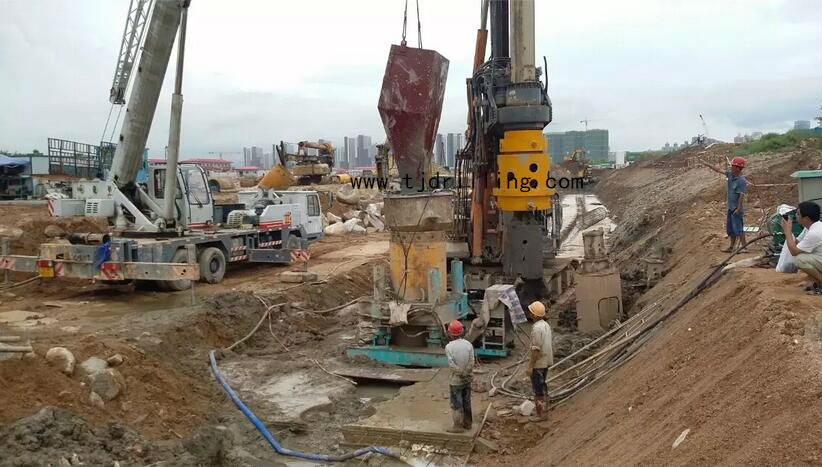
A slurry wall is a below-ground structure built to block contaminant and groundwater flow through soil.
The process involves excavating a trench and filling it with a bentonite and water slurry, which keeps the sides stable during digging. Once the trench is ready, it is often backfilled with soil-bentonite or reinforced concrete to create a permanent, watertight wall.
As the technique produces low vibration and minimal noise, it is ideal for use in urban or sensitive environments where ground stability is critical.
Why build a slurry wall?
Slurry walls are chosen for projects where strong, watertight barriers are needed at significant depth. Key benefits include:
No vibration and minimal noise – making them suitable for unstable or urban sites
Effective seepage and groundwater control – permeability as low as 1×10⁻⁹ m/sec
High structural strength – able to withstand heavy loads
Environmental protection – designed to resist contaminants such as VOCs, hydrocarbons, diesel, solvents, and tars
Time and cost efficiency – top-down construction enables quicker installation compared with traditional methods
These structures are especially useful for basements, tunnels, dams, sewage projects, and containment walls for contaminated sites.
What are common slurry wall applications?
Slurry walls are versatile and can be used across a wide range of environmental and civil engineering projects, including:
Groundwater control for dams, levees, and flood protection
Environmental remediation to encapsulate contaminated groundwater or landfill leachates
Earth retention and basements in high-rise and commercial buildings
Tunnels and shafts, including cut-and-cover rail systems and bridge foundations
Gas migration barriers to prevent the lateral movement of hazardous gases
Sewage and water infrastructure for tanks, treatment facilities, and seepage control
Their ability to combine strength, depth, and impermeability makes them a preferred method for complex infrastructure works.
How much do slurry wall construction services cost?
The cost of constructing a slurry wall varies depending on factors such as trench depth, wall thickness, site conditions, and whether the wall is designed for structural support or environmental containment.